Boots on the Ground: Why Community Engagement Is the Heart of What We Do
Service-Learning and community engagement is something I discovered in life and not just the classroom. Growing up in Nigeria, my father was a Social Studies and Physical Health Education teacher, and our household was shaped by a consistent ethic of community responsibility. It was natural for me to be involved in church volunteering and community activities. I joined a press club where we voluntarily researched the week’s news and read it aloud to fellow students every Friday morning on the assembly ground. I later became the head of our environmental sanitation group. Nobody required these things of me but they felt like a natural extension of how I was raised to show up in a community. The French sociologist Pierre Bourdieu might call this my habitus: the deeply embodied set of dispositions, values, and ways of seeing the world that form before we have language to name them. Long before I ever read a single line about service-learning or community engaged scholarship theories, I already believed, in my bones, that knowledge was meant to serve people.
It was at the University of Ibadan that I finally found an academic language for what I had always felt. There, Dr. Tolulope Gbadamosi introduced me to service-learning as a structured pedagogical method. The encounter, for me, was more of a validation than discovery. I went on to write my master's thesis on the effect of service-learning instructional pedagogy on secondary school students' knowledge and attitudes toward social vices concepts in the curriculum. Using an experimental design, I found that service-learning did indeed improve students' knowledge of social vices. Attitude change, however, was more stubborn. Four weeks, as my thesis committee rightly noted during my defense, is simply not long enough to shift something as deeply rooted as attitude. But there were signs—quiet tilts toward positive change—that told me something real was happening beneath the surface. That experience changed everything for me.
When I arrived at Baylor University in 2022 to begin my doctoral program in Curriculum and Teaching, I carried that experience and that habitus with me. I hit the ground running almost immediately. A friend who had also just started the PhD program was teaching at a local private school, and she mentioned that students there had books they no longer needed and wanted to discard them. They were still good and useful books. Meanwhile, I had just learnt of a school located in the inner urban city where students were reading from outdated editions, some even from textbooks meant for lower grade levels. I reached out, connected the two, and we made the donation happen. What mattered most to me, though, was not just moving the books. I sat with the students who gave them away and asked them to reflect: Why does this matter? What does it mean to share something you no longer need with someone who does? Their answers were generous and thoughtful. These sixth graders spoke about fairness, about kids like them who deserved the same chances. That small act was, to me, service in its truest form. I say this because even when I had relocated from Nigeria to the US, my passion for community service was ever burning.
And then came the annual review form.
Every doctoral student at my institution completes one at the end of the academic year: publications, conference presentations, courses taught, and service. I remember staring at that form and noticing, with shock, how substantial the space allotted to research and teaching was, and how thin in an almost apologetic way, the space for service appeared. Even more revealing was how service was defined. The form was oriented almost entirely toward institutional service: peer review, committee memberships, departmental roles, administrative contributions. Community service, the kind that puts a scholar in direct relationship with the people their work is supposed to serve, was an afterthought. A footnote.
I was not entirely surprised, but I was disappointed. And I am not alone in that disappointment. Scholars, particularly Black scholars and scholars of color, have long documented how the Academy systematically undervalues community-engaged work (Harley, 2008; O’Meara, 2023; Toh & Grover, 2025). Many have described the painful experience of being asked, implicitly or explicitly, to choose between their research productivity and their obligation to the communities that shaped them. From 2022 until now, I have watched tenure-track faculty quietly remove community board memberships, neighborhood education commitments, and social justice advocacy from their curriculum vitae even when they find these work as important. However, they are legible in the wrong currency. The Academy had decided what counted, and community engagement, too often, did not.
"The Academy had decided what counted. And community engagement, too often, did not."
This troubled me deeply, and it still does. But it also clarified something for me. If I was going to build a scholarly life in this space, I needed to be intentional about weaving community engagement into my work in ways that the Academy could not easily dismiss. Not as tokenism or a line item on a curriculum vitae, but as a methodology, a commitment, and a form of rigor in its own right.
Today, as a doctoral candidate and teaching assistant at Baylor, I have the opportunity to work with preservice teachers on social studies methods and to teach and explore social issues like race, gender, religion, disability, sexual orientation, and how each of these shapes the lived experience of students and teachers in schools. At the end of the semester, rather than ending with an in-class presentation of the project the preservice teachers are expected to complete, I ask them to take their inquiry projects into the open. They design large printed QR codes that are visible and placed in conspicuous locations across campus. Those images are designed to link to their research findings. Someone walking by might scan a code and learn about the experience of deaf students on campus, or the challenges facing immigrant children in local schools, or what it feels like to navigate an institution as a queer student. This can lead to conversations and collaborations if the person chooses to reach out after reading. What starts as a course assignment becomes a small but real act of public education.
It is in moments like these that I feel the full weight of why this work matters, and why I believe it will outlast almost every other form of academic labor we currently prize.
Consider what artificial intelligence is now doing to our field. Scholars and professionals are understandably anxious about which jobs AI will absorb. Content generation, data analysis, literature synthesis, to mention a few, are all in various ways, threatened. And one could argue, with some discomfort, that a great deal of theoretical and epistemological work in the social sciences is also, in some sense, a sophisticated form of pattern recognition and knowledge production that AI is beginning to approximate. But here is what AI cannot do at least for now: it cannot sit in a community. It cannot build trust over time physically. It cannot look a child in the eye after a lesson and understand, from the texture of that moment, what the curriculum failed to reach. The jobs least vulnerable to technological displacement, as many analysts have noted, are those that require human presence, human judgment, and human relationship. The electrician. The plumber. The community organizer. And, I would argue, the community-engaged scholar.
A researcher who develops a framework, tests it empirically, publishes it, and presents it at conferences does something valuable. But the researcher who then walks back into a local school, offers training on that same framework, supervises its implementation, and stays long enough to learn from the community what the framework got wrong is doing something irreplaceable. They are also, I would suggest, doing something deeply rigorous. Community-engaged scholarship is not softer than traditional research. It is harder, in many ways. It demands accountability to audiences that are not safely contained within peer review. It requires the scholar to be legible outside the university, which means being honest about the limits of their expertise in ways that academic writing rarely demands.
I dream of a future where community engagement is not a footnote in graduate school but a genuine pillar of it. Where every graduate student is expected to engage in at least one piece of work each year that can be directly used by the communities where they live and work, with evidence, follow-through and sustained relationship. Where the burden of endless publication is lightened, and the quota for meaningful community presence is expanded. That is not a utopian fantasy but the direction our field is moving and must move if it wants to remain relevant in a world that is increasingly questioning who universities are actually for. I grew up knowing the answer to that question. Communities are not the audience for knowledge. They are its source, its testing ground, and its purpose. I came to academia to honor that conviction, and I intend to spend my career doing exactly that with my boots on the ground always.
References
Harley, D. A. (2008). Maids of academe: African American women faculty at predominately White institutions. Journal of African American Studies, 12(1), 19–36.
O'Meara, K. (2023). Legitimacy, agency, and inequality: Organizational practices for full participation of community-engaged faculty. In Publicly engaged scholars (pp. 96-109). Routledge.
Toh, C., & Grover, A. (2025). “I Wish I Could Do More”: Institutional and Systemic Barriers to Effective Community-Engaged Learning for Equity and Inclusion in STEM Disciplines.
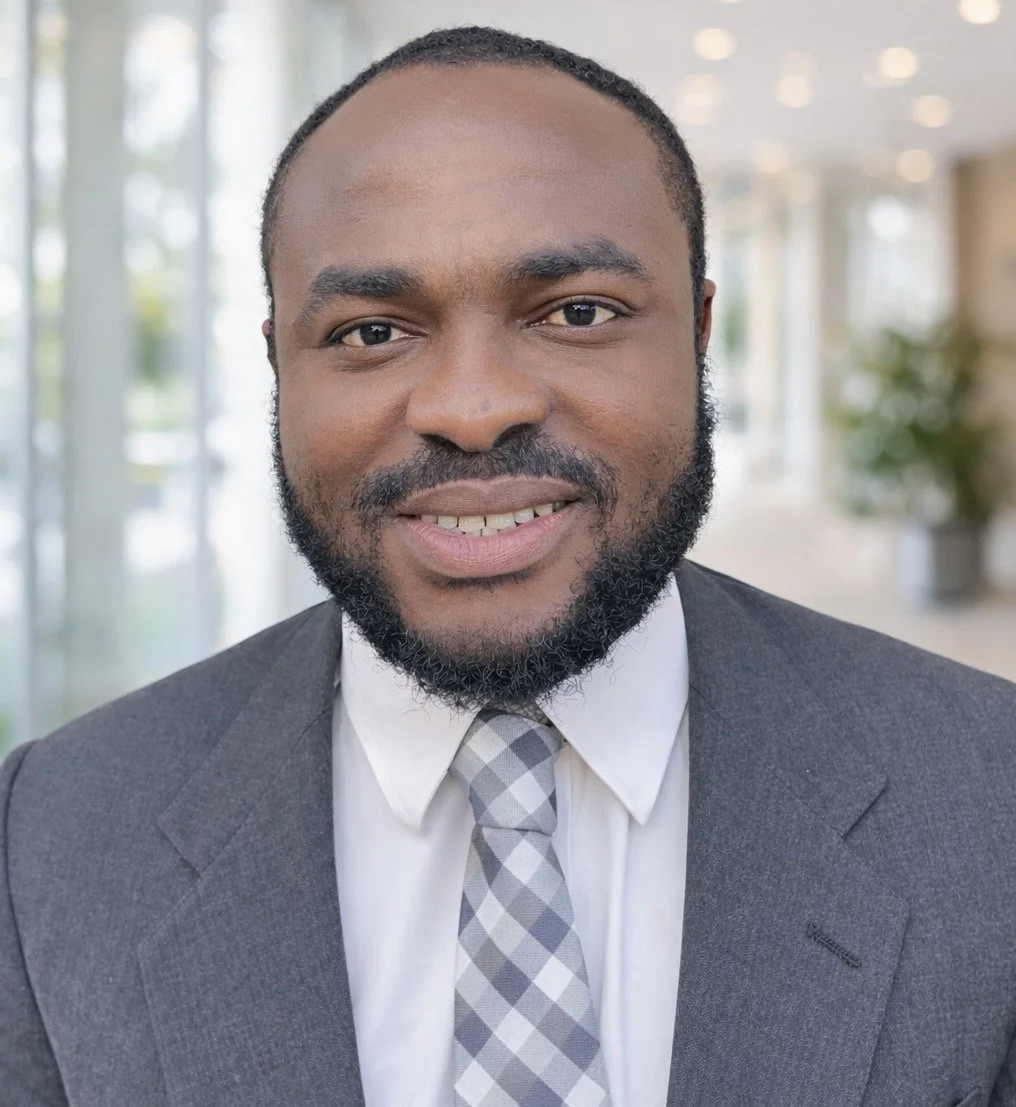
Toyosi Stephen Adedara is a doctoral candidate in Curriculum and Teaching at Baylor University, where his research sits at the intersection of civic education and social issues in schooling. He is particularly drawn to questions of how the social studies curriculum frames the civic knowledge and identity of Black, immigrant, and indigenous students, and how community-engaged pedagogy can shift young people's understanding of social justice. A former secondary school teacher of social studies and government in Nigeria, Toyosi moves between the practitioner and the scholar with equal comfort. When he is not in the classroom or the community, he is probably debating the best jollof rice recipe with someone who is very confidently wrong.