Sustaining the Drive: Reflections on Critical Hope
For the past two years, I have begun the first session of my class, "Working For and With Communities," with a discussion of my history of international community-based work. The unique course model brings together a diverse team of Boston College undergraduates spanning various majors, class levels, and interests. I show them the photos of me in Costa Rica, dressed in the inextricable baggy clothes fashion of the early 2010s. I trace my journey across a service-learning course I took in Spain while studying abroad, teaching English in my small college town. I end with my time in Indonesia, as a Peace Corps Volunteer, where the much more fashionable batiks outshine the questionable styles of my younger days. Within these, at times jolting, blasts from the past, I aim to open my students’ eyes to how these experiences have pushed me to question my place in the process.
As a bright-eyed and bushy-tailed teenager, I joined a high school service trip to Costa Rica with a group of students from across the U.S. and Canada. I had never met any of the other students in the program until we landed. All I knew was that we were promised some service opportunities. Eventually, we were tasked with building a mural at a local elementary school. My heart swelled at the idea of providing something to this new community that would be there forever. One morning, we all hopped into a van, excited to connect with the students at the school and work on this project. Yet, my most distinct memory, over 15 years later, is a group of children staring at us as we made this mural while they were in class. The students, who would be left with whatever product we created, played no part in the process. It was only during recess that we had an opportunity to connect with the students, albeit informally. They’d shy away from us initially, but eventually everyone succumbs to the global language of soccer. We’d play with them for a bit, but communication was a challenge. Thankfully, Detroit Public Schools equipped me with a pretty strong level of Spanish, but that wasn’t the case for my fellow program participants. I will note…there was one bilingual child at the school who had a parent from Kentucky and had the strongest southern drawl in English that completely faded when he shifted to Spanish.
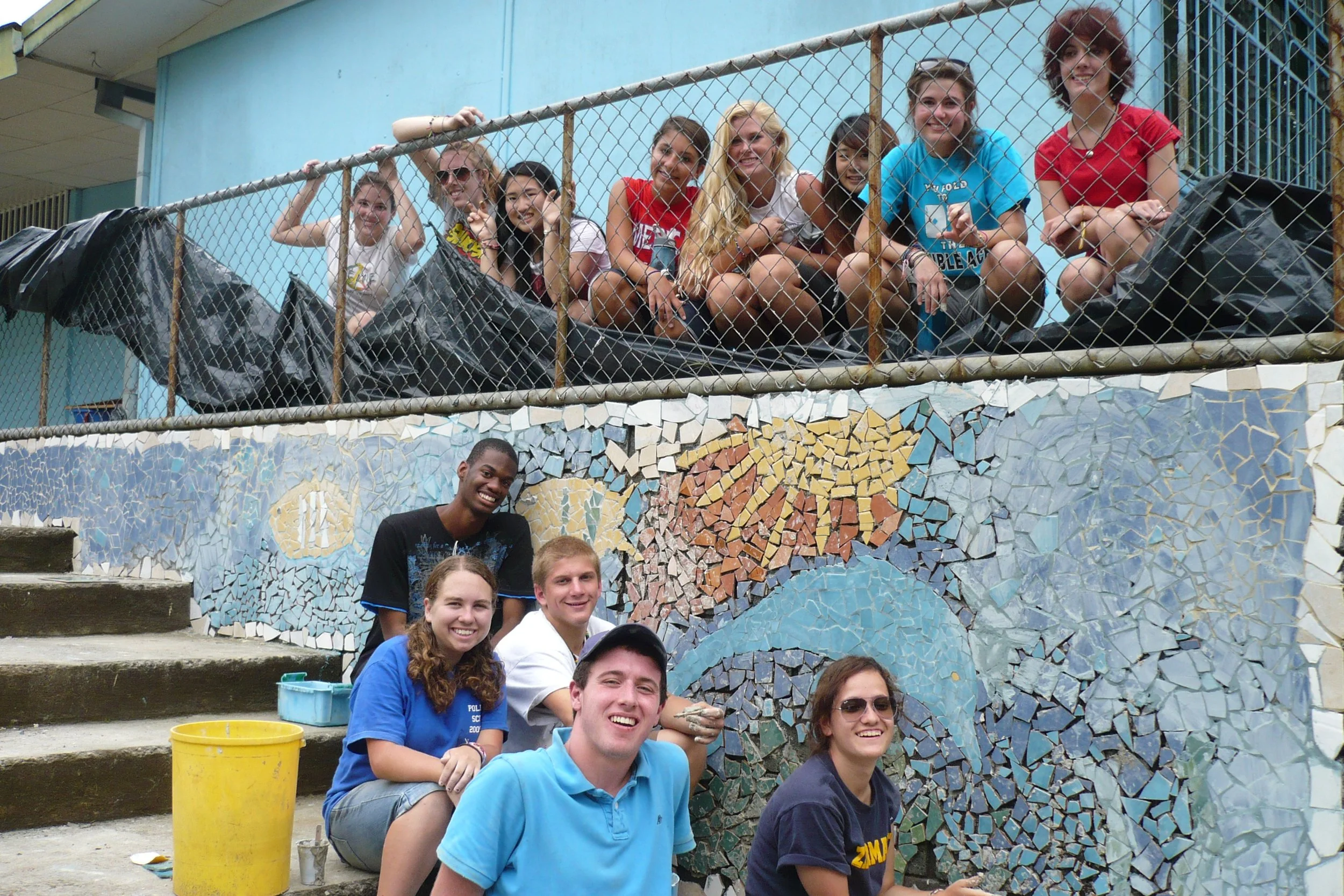
Puriscal, Costa Rica
I begin my first class by telling my students that I couldn’t tell them anything about that school. I don’t even know if I ever learned the school’s name. I have no idea who asked for the mural. I’m not sure why we weren’t introduced to the students, nor why we didn’t have anyone who could translate for us. What I do know is that we all put this experience on our college applications. I know we couldn’t wait to see volcanoes and the rainforest. I know that the internal racial and socioeconomic dynamics of our group made me hyper aware that Detroit was a safe haven. What I would later come to learn is that I was complicit in an experience rooted in a deep history of extraction marketed as education (O’Sullivan & Smaller, 2023). I would later learn I was engaged in a form of charity that sought to assert my cultural superiority (Farmer, 2005). I go on to give more insight into my experience in Spain.
I tell my students that I was formally introduced to service-learning in Spain. I commend my alma mater, Bowling Green State University, for finding ways to ensure that study abroad was not just about paella and tinto de verano. We spent a semester learning about second-language acquisition while teaching English classes with La Unión Comarcal del Henares de Comisiones Obreras, a labor union in our small town of Alcalá de Henares. And while I felt more connected to my city because of it, let’s be honest. Was I, a 20-year-old with only two years of college education, qualified to teach 20-30 adults by myself? I would later learn that on a spectrum, my community engagement was low (Crawford & Berquist, 2020). I can’t say I was truly a partner in providing English courses. The courses were not designed specifically for adult workers looking to use their English professionally. At that stage in my college career, I wouldn’t have even known how to do that. There was no needs analysis, and we never discussed sustainability. I don’t know if those classes continued after I returned to the States.
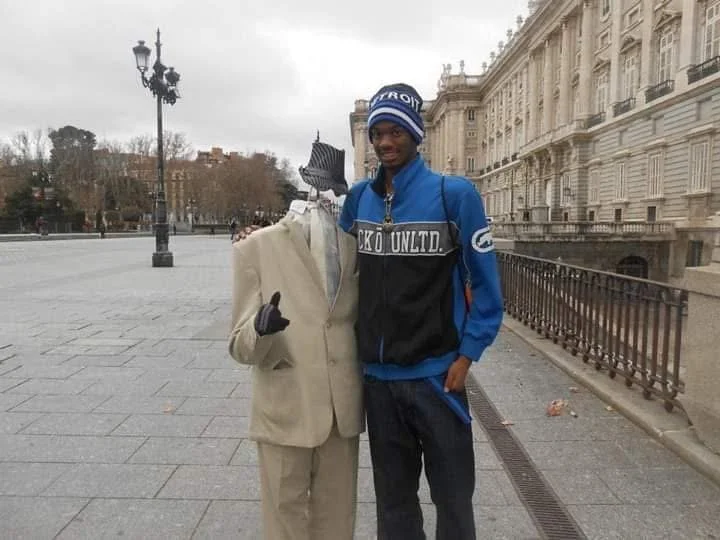
Madrid, Spain
My time in the Peace Corps, in Java, was very different. It brought me close to some incredible views, but some even more incredible people. I worked with a group of exceptionally talented English teachers at a vocational school, and this time I felt integrated into my community. I knew my favorite place to get ayam geprek. I knew my school, my administration, and my students. I team taught instead of taking the lead. We developed lesson plans that could be used for years to come. Yet, I struggled constantly with a tension that my community viewed me as an expert coming to make change over collaboration. I once showed my students a Google Map view of my hometown, and I’ll never forget the incredulity of one boy learning that homelessness exists in the U.S. What I learned from my time in the Peace Corps is that the historical, cultural, economic, and social dynamics between the Global North and Global South don’t just impact the politics we see on the news, but the real lived experiences of people on a day to day basis. Learners globally are positioned to see themselves and me through these lenses (López & Lara Morales, 2021). I start my class with these stories to contextualize the project we have agreed to embark on.
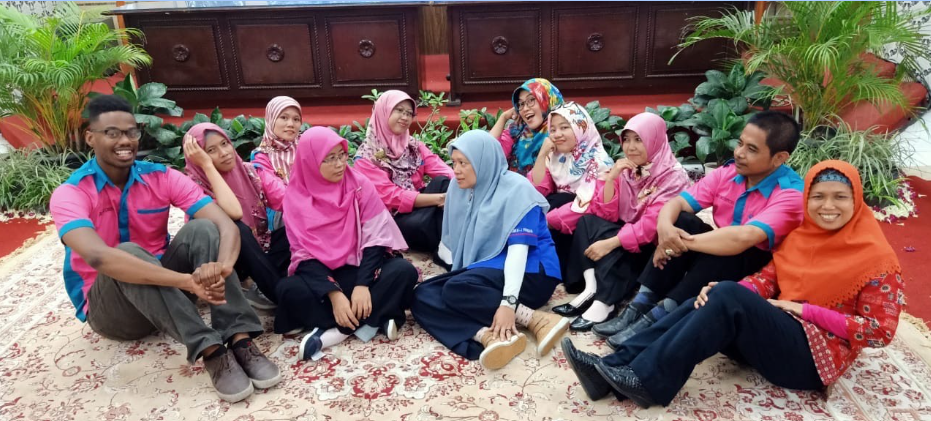
Pasuruan, Indonesia
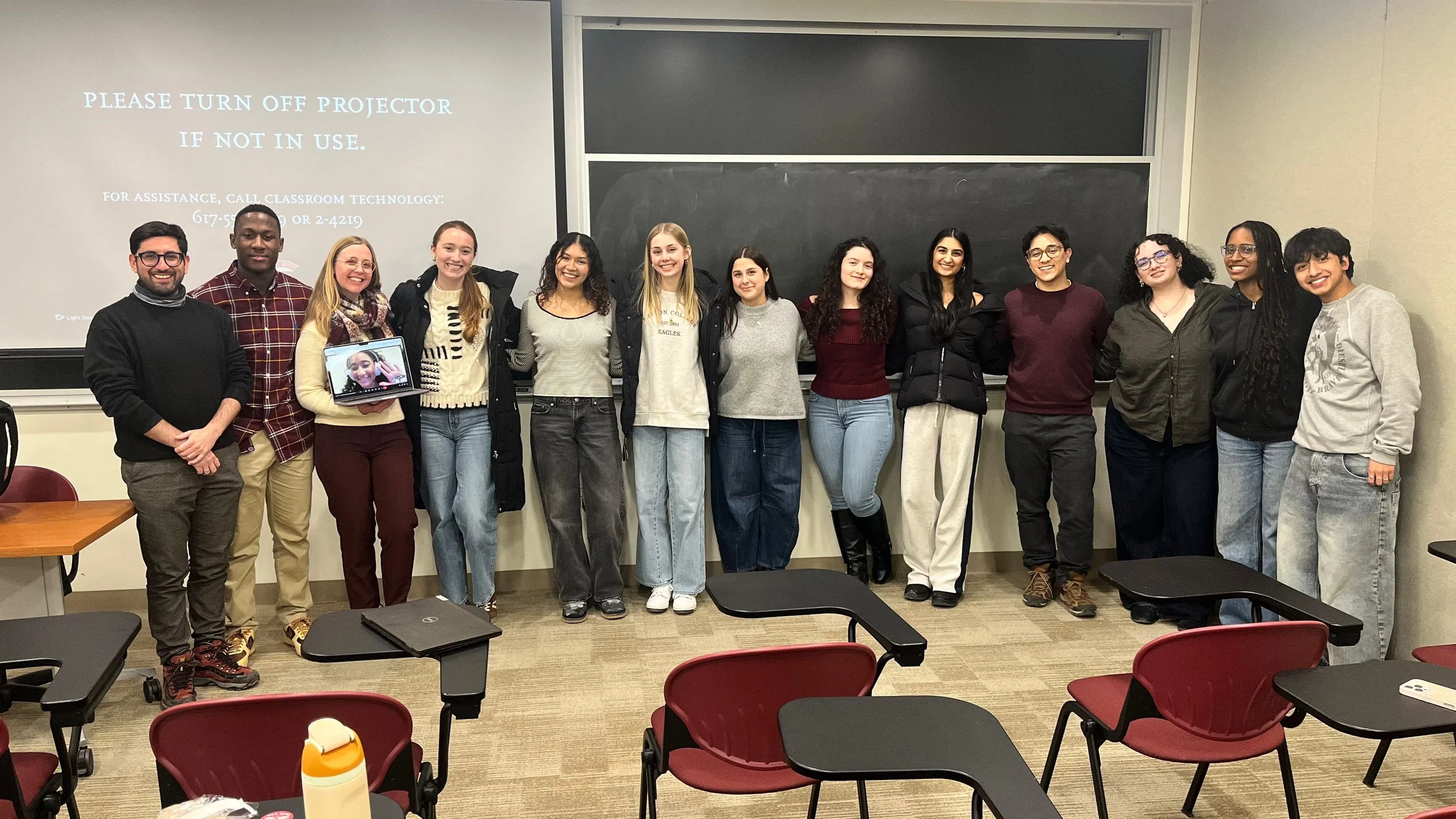
The Schiller Institute at Boston College has graciously allowed me to teach Working For and With Communities. The program is comprised of two parts. The first is a 16-week semester course in which students learn about the principles of intercultural competence and Design Thinking while working with a community partner in Santiago, Chile, to co-design a project. The second is a 3-week implementation phase in Chile, combined with a 4-week internship in the State to follow up on the country work. This year, I made a new pedagogical choice. I didn’t give the students the proposal from our community partners until the middle of the semester. I chose this because I wanted them to learn more about the context of the project, deepen their research skills, and strengthen their intercultural competence. I drew on how working in diverse settings and on diverse teams requires deep reflection on affective, behavioral, and cognitive dimensions of culture( Hammer, 2012; Kirk-Lawlor & Allred, 2017). When I told my students I had the proposal the entire semester, I was taken aback by the collective exasperation that filled the room.
I commend the candor of some of the students. They asked me if I thought that it would make a difference in the project’s product if they had the proposal eight weeks ago vs now. They questioned how they would be able to execute their project effectively. They wondered if they were skilled enough to do what was being asked of them. And, they craved more direction.
I went home conflicted. Admittedly, I was happy they had reached these questions. I had not questioned what I would be doing in Costa Rica before going. I hadn’t considered what effective English lessons would have looked like in Spain. In Indonesia, it took me months to grapple with the idea that I needed to find a balance between my skillset and the community's expectations. However, my secret educational facilitator knowledge likely does nothing for a group of tense Gen Zs fueled by coffee and a hope for a better world. I reflected, and I noted I hadn’t set enough foundation. I had not brought in my driving philosophy, which is shaping this course. I needed to go back to the drawing board and provide a guiding light that was missed in week one.
Just last week, we took time in class to collectively read Grain & Lund’s (2018) section on Critical Hope. I expressed to my students that I believe that the culture of U.S. institutions, in particular, is deeply rooted in product over process. This class is designed to resist that urge. I let them know that I’m facilitating this course on a foundational hope that a deep commitment to an ethical and mutually beneficial process is just as important as your product. I affirmed that I am critically hopeful that we make the world a better place when we are honest about the historical and contemporary ways we are complicit in an inequitable global system. I’m critically hopeful that ethical engagement rooted in social justice can serve as a model for organizations, institutions, and governments. The concept of Critical Hope is what keeps me going in some of these deeply disturbing times. I truly believe in the power of deep reflection and critical action. Don’t get me wrong, I’m generally not an overly optimistic person. In fact, those closest to me may say I’m pragmatic to a fault. However, I’m inspired to be hopeful by all those whom I’ve cited here. I’ve coincidentally only cited works I’ve asked my students to engage with. I’m too inspired to be hopeful by their reactions to these readings, and their desire to do good, hopefully critically.
Boston College
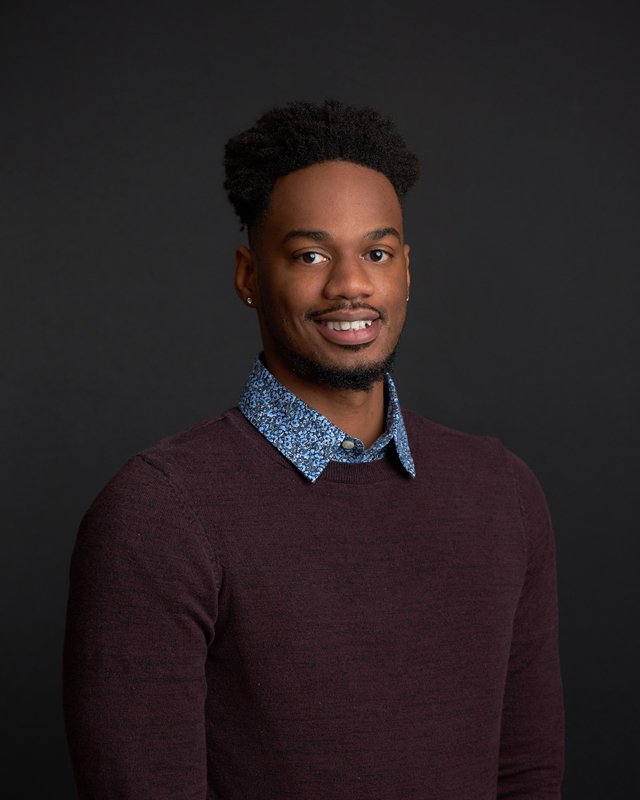
Vaughn Thornton works full-time as the Assistant Director of Global Engagement at Boston College and is a part-time instructor of the Working For and With Communities program in the Schiller Institute for Integrated Science and Society. He is a fourth-year doctoral student in Higher Education at Boston College, exploring ethics, processes, and outcomes in international service learning programs. His research interests include critical perspectives on intercultural competence development, university community engagement, and experiential learning.
Outside of work, you will likely find him obsessing over the latest Marvel or Star Wars film.