
Graduate Student Preparation in SLCE
This Special Interest Research Group (SIG) welcomes scholars and practitioners who are interested in the preparation of graduate students for service-learning and community engagement (SLCE) teaching, research and practice. The SIG will provide support for scholars who are interested in conducting research on graduate-level SLCE. It will also support practitioners who are interested in building research-informed programs to train future engaged scholars and Community Engaged Professionals. Graduate students are welcome and encouraged to share their insights, interests and experience.
SIG Chairs: Susan Harris, University of Southern California (scharris@usc.edu) & Emily Phaup, Campus Compact (ephaup@compact.org)
Join us at IARSLCE 2026!
Graduate Student Preparation in SLCE (SIG Session)
October 11, 2026 | Concurrent II: Roundtables | 3:45-4:45 | Monroe 628
This Special Interest Research Group (SIG) welcomes scholars and practitioners who are interested in the preparation of graduate students for service-learning and community engagement (SLCE) teaching, research and practice. The SIG will provide support for scholars who are interested in conducting research on graduate-level SLCE. It will also support practitioners who are interested in building research-informed programs to train future engaged scholars and Community Engaged Professionals. Graduate students are welcome and encouraged to share their insights, interests and experience.
Programs, Practices, and Possibilities for Community-Engaged Graduate Education
October 12, 2026 | Concurrent VI: Roundtables | 3:45-4:45 | Monroe 317
The two presenters are part of a group of practitioners in community-engaged graduate education programs which is involved in a collaborative writing project developing an edited volume for publication. In alphabetical order all the authors contributing to the said writing project are Samantha Bernstein-Sierra, Lucas Díaz, Susan Harris, Ryan McBride, Diana Soto-Olson, Elaine Ward, Nicole Williams, and Meghan Zulian.
The writing project will seek out perspectives in a three-part exploration as follows:
1) A landscape overview: information about the emergence and current landscape of graduate preparation for community-engaged work.
2) Successful strategies: field stories and program cases that demonstrate how this work has been sustained, particularly in contexts of limited institutional support.
3) Future directions: forward-looking frameworks for more durable, institutionalized graduate CES preparation.
The raison d'être for the project is the representation of diverse perspectives by practitioners in SLCE graduate education. The working group has met regularly for nearly a year and studied three datasets. The project emerged from a long process of conversations and information sharing identifying challenges and adjustments within many SLCE graduate programs whose configurations continue shifting while persisting advocating for a place in the future of graduate education through SLCE.
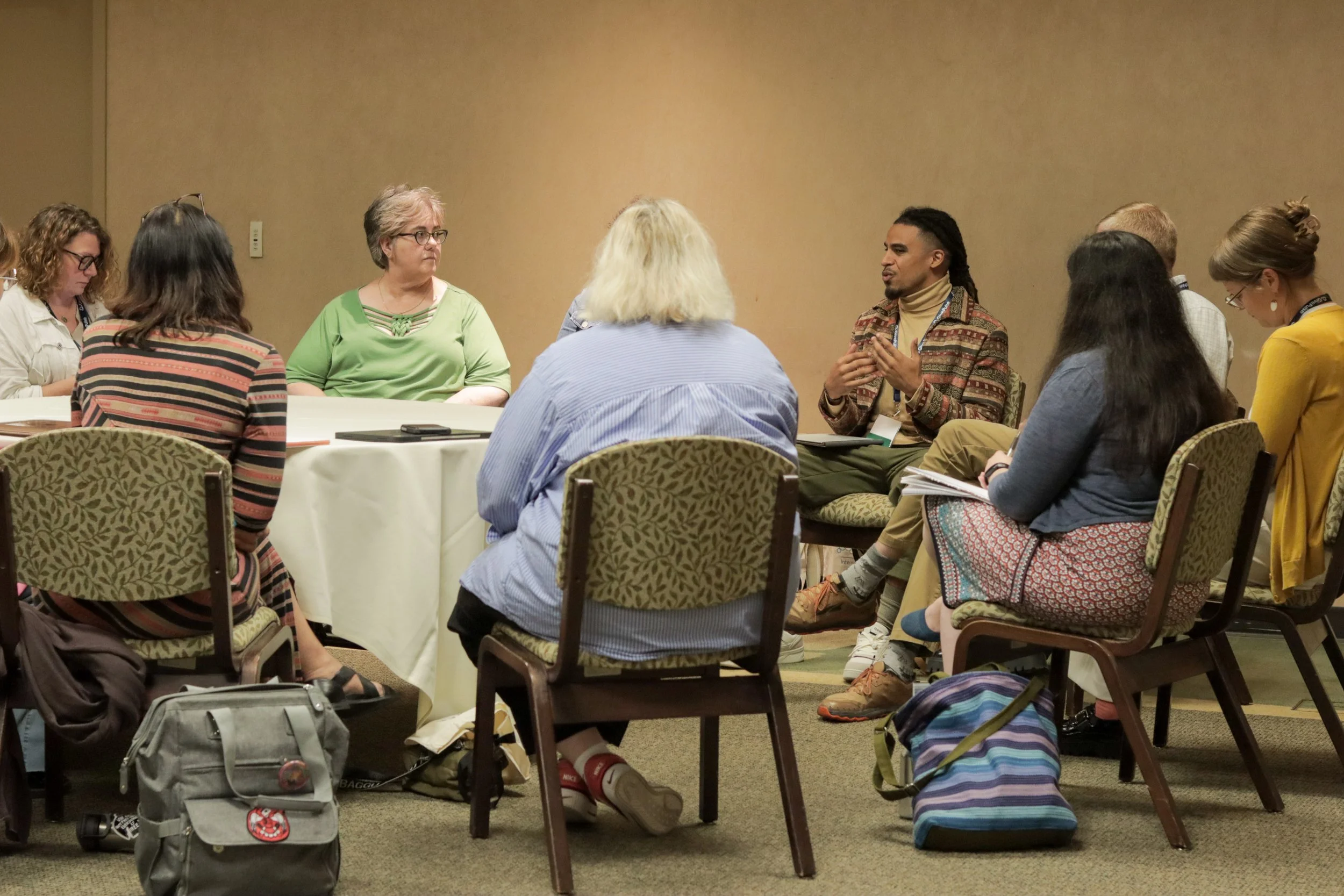
In the roundtable, the authors will speak about the experience of working together with collaborators across the country and across program configurations and experiences. They will also share preliminary findings and talk about some of contributions to their upcoming publication. The audience will be invited to participate with story telling and facilitated discussion.
Call for Submissions
Book title: Community-Engaged Graduate Education: Programs, Practices, and Possibilities
Editors: Diana Soto-Olson, Samantha Bernstein-Sierra, Lucas Díaz, Susan Harris, Ryan McBride, Elaine Ward, Nicole M. Williams, and Meghan Zulian
Call for Submissions: Community-Engaged Graduate Education: Programs, Practices, and Possibilities
The editors welcome submissions of chapters and short “vignettes” for an edited volume focusing on the preparation of graduate students for service-learning and community engagement. Read the complete Call for Proposals.
Editors will host an in-person roundtable discussion about the book at the IARSLCE conference on Monday, October 12 at 3:45pm as well as host a virtual Info/Q&A session with prospective authors on Thursday, October 15 at 2:00pm CT: Click here for the link (Passcode: 460817). Questions? Please email CESgradbook@loyno.edu.
Summary
This Campus Compact-supported book examines the perspectives, programs, structures, and particular approaches that prepare graduate students for a wide range of community-engaged careers in and outside of academia. Such professional positions exist in public humanities programs, university service-learning centers, non-profit organizations, and community-engaged research offices. We are calling for contributing authors from a variety of disciplines and institution types who can offer their perspectives on graduate education preparation where community engagement plays a foundational role. The editors welcome submissions of chapters focusing on innovations in pedagogy, disciplinary and cross disciplinary innovations, theory, research, practice, institutional models, and campus-community partnerships in graduate student service-learning and community engagement; we also seek short submissions offering personal reflections, experiences, or imagery that support community-engaged graduate preparation. Please send any general questions about the book to CESgradbook@loyno.edu. For information on the themes and sections, read the complete call for submissions.
Proposals will be accepted through October 31, 2026.
Submission Information and Guidelines
Interested authors should submit an abstract (100 words max for short piece and 500 words max for a chapter) via this Google Form by October 31, 2026. Authors will be notified about decisions by December 15, 2026. Full chapter and short contributions will be due by April 15, 2027. Chapters should follow the formatting and style guidelines of the APA 7th Edition. For additional information about preparing your manuscript for publication – including norms regarding the use of A.I. – please see here. General questions about the book may be directed to Diana Soto-Olson at (dsotools@loyno.edu) or to CESgradbook@loyno.edu.
Timeline
Abstracts due: October 31, 2026
Response to authors: December 15, 2026
Full chapters due: April 15, 2027
Revisions and editing of chapters: Summer 2027
Anticipated publication: Late 2027 / early 2028