
Hydrophobic at the best of times, I did not expect my PhD journey to leave me captivated by rivers. Yet as my research unfolded across the cities of Oxford in the UK, Makhanda in South Africa, and Maun in Botswana, I found myself captivated by flows of water. In turn, I began to think about what those flows might teach us about community engagement.
In Oxford the Thames threads through a city whose name itself evokes a river crossing; even the city’s coat of arms shows “an ox paddling idly over a river” (Davis, 1973, p. 258). In Makhanda – my primary study site – various tributaries run through the town. Yet Makhanda’s rivers occupy a more ambivalent symbolic space for the town’s residents. Formed originally as a military garrison, Makhanda is rooted in the violence of frontier wars, where amaXhosa residents were forcibly displaced across the Great Fish River by British colonial forces (Mostert, 1992). Within the town itself, waterways were once used to demarcate the boundaries that enforced apartheid’s spatial segregation. Finally, in Maun, Botswana, where I had the privilege to spend time writing, I was struck by the pathways and shifts in landscape caused by water. Each year, the Okavango Delta, a dense, fan-like inland wetland, emerges as the Okavango River spills not into the sea, but into the sands of the Kalahari Desert. Fed by floodwaters from Angola, the Delta becomes a vast and shifting mosaic of seasonal channels, as water carves itself into the dry landscape.
As I witnessed this cross-country phenomenon, I was reminded of this reflection by Abagai (2024), a volunteer at Makhanda’s River Rescue, which works to clear rubbish from Makhanda’s watercourses:
Rivers don’t follow strict borders because they cross many boundaries. They are often shared by multiple neighbours, across different countries, provinces, or communities. They flow through and connect different areas.
Rivers divide and they also connect; they form the lines of segregation but they also stitch landscapes together. They may also represent healing. In Maun, for example, communities follow the tongue of the flood and use the water to seek blessings for the year. In Makhanda, many residents describe waterways as places of cleansing and repair despite, and perhaps sometimes because of, their fraught histories.
Watching rivers made me think about other flows: of people, ideas, and knowledge. Could these flows be, like a river, gently but persistently transformative? Could crossings that move across geographies and social divides slowly reshape relationships and landscapes? These questions brought me back to my dissertation. I began to wonder: Could higher education community engagement become a flow in this way, or, in other words, could it be a facilitator of such movements, crossings, and connections?
Although there are varying, sometimes competing, definitions of the phrase, I think of community engagement as the mutually beneficial relationships between universities and neighbouring communities aimed at enhancing teaching, research and community development. Like rivers, community engagement winds through disciplinary boundaries and institutional hierarchies. Just as rivers reshape the land slowly, perhaps the partnerships generated and sustained through this form of engagement have the potential also to reshape the historical relationship between universities and their surrounding communities.
At the same time, we must be cautious of presenting community engagement as a panacea: these flows are not always seamless and equitable. Community–university relationships may fall short when engagement is superficial, one-directional, paternalistic, treated as peripheral to higher education’s core mission, or co-opted by neoliberal versions of the university (Bickford & Reynolds, 2002; Brackmann, 2015). In such cases, community engagement may reinforce rather than undo existing divisions. The challenge, then, is to imagine and enact community engagement as a reciprocal flow, as one that recognises injustice and slowly, stubbornly seeks to dismantle it.
If we treat university–community engagement as a reciprocal flow, several practical implications follow:
Intentional and bi-directional boundary crossing: Meaningful engagement crosses disciplinary, institutional, social and geographical borders. We need to pay attention to and support the pathways that enable students, staff and community members to move in both directions across these divides.
Sustained presence: Rivers transform through continuous movement. Engagement that endures is more likely to build mutual trust and to influence institutional practice and community life. Furthermore, not all impact is immediate. Like channels eroding rock, some transformations, related both to community development and university institutional culture, are gradual and cumulative.
Recognition of local histories and politics: As the discussion of rivers in Oxford, Makhanda, and Maun demonstrate, water’s meaning changes with place. So too must engagement. Community engagement projects work best when they pay attention to context, acknowledge histories of dispossession and exclusion, and centre local priorities and knowledges.
My PhD taught me to look at water as both metaphor and method. Rivers are boundary-makers and boundary-breakers; they are agents of destruction and of renewal. If we approach community engagement as a sustained, reciprocal, boundary-traversing flow, perhaps we can help create the kinds of changes that persist beyond a single project, a single grant, or a single academic year. That, for me, is the promise that community engagement holds: the possibility that slow, consistent movements of people and knowledge can, in time, reshape the fractured landscapes we have inherited.
Reference list
Abagai, A. (2024, January). Skyscrapers and floating mansions in the rivers: macroplastic habitats. https://riverrescue.co.za/skyscrapers-and-floating-mansions-in-the-rivers-macroplastic-habitats/
Bickford, D., & Reynolds, N. (2002). Activism and service-learning: Reframing volunteerism as acts of dissent. Pedagogy, 2(2), 229-252.
Brackmann, S. M. (2015). Community engagement in a neoliberal paradigm. Journal of Higher Education Outreach and Engagement, 19(4), 115-146.
Davis, R. H. C. (1973). The ford, the river, and the city. Oxoniensia.
Mostert, N. (1992). Frontiers: The Epic of South Africa’s Creation and the Tragedy of the Xhosa People. Knopf.
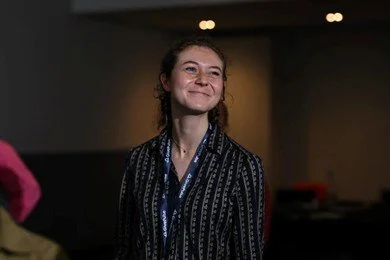
Claire is Chair-elect of GradSN. She is currently pursuing a DPhil (PhD) in Education at the University of Oxford, focused on the lived experiences of those involved in community-university partnerships in the student town of Makhanda, South Africa. She holds a MSt in Women’s, Gender, and Sexuality Studies, and MPhil in Economics. She currently works for the education-focused NGO, Omprakash, which connects change makers with social impact organisations around the world, and previously worked at the Rhodes University Community Engagement Division, responsible for facilitating an engaged research group and a community engagement short course for high schools. Her research interests include community/public engagement, African higher education, feminist and engaged research methods, and community histories.